

Feeling tired, gaining weight unexpectedly, losing hair, struggling with sleep, or noticing mood changes can make you wonder whether your hormones are off. Hormones are chemical messengers that regulate metabolism, reproduction, blood sugar, mood, skin, bones, and many other body functions. Even small changes can affect several organs at once.
This guide explains how to know if your hormones are off balance, what causes hormonal imbalance, how testing works, and what treatment options may look like. It also shows how Uptown Pharmacy can support patients through medication reviews, refill management, and compounding services when prescribed.
What Is Hormone Imbalance?
Hormone imbalance means one or more hormones are higher or lower than your body needs. Even small changes in hormone levels can affect how different organs function because hormones work together to regulate essential processes throughout the body. A common example involves:
- Estrogen.
- Progesterone.
- Testosterone.
- Thyroid hormones (T3 & T4).
- Cortisol.
- Insulin.
- Prolactin, or others.
Temporary hormonal fluctuations are normal during puberty, pregnancy, and menopause. Persistent symptoms deserve medical evaluation.
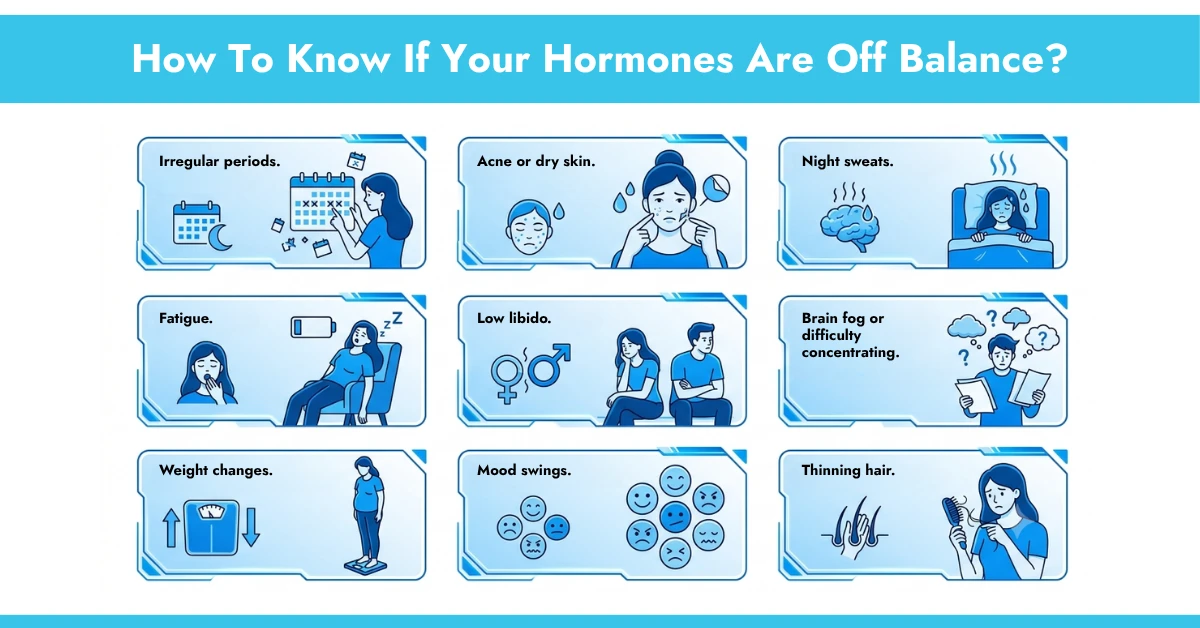
How To Know If Your Hormones Are Off Balance?
You can tell if your hormones are off balance by looking for symptoms that keep happening over time.
Common signs include:
- Irregular periods.
- Acne or dry skin.
- Night sweats.
- Fatigue.
- Low libido.
- Brain fog or difficulty concentrating.
- Weight changes.
- Mood swings.
- Thinning hair.
Some people also notice headaches, dizziness, or hair shedding along the scalp and hairline. These symptoms are not specific to one hormone problem, but they can be clues that something in the endocrine system needs attention.
What Causes Hormones To Be Imbalanced?
Hormone imbalance can affect both women and men, although the underlying causes often differ depending on age, medical history, and overall health.
In women, common causes include:
- Perimenopause and menopause.
- Pregnancy and postpartum hormonal changes.
- Polycystic Ovary Syndrome (PCOS).
- Thyroid disorders.
- Chronic stress.
- Diabetes and insulin resistance.
- Certain medications.
- Significant weight gain or weight loss.
- Poor sleep and lifestyle factors.
Men may also experience hormone imbalance due to aging, obesity, thyroid disease, pituitary disorders, certain medications, or clinically confirmed testosterone deficiency. Current Endocrine Society guidance recommends diagnosing testosterone deficiency only when symptoms are accompanied by consistently low laboratory testosterone levels, rather than symptoms alone.
How Do You Test For Hormonal Imbalance Accurately?
Hormonal imbalance is usually evaluated with a symptom review, medical history, and targeted lab testing ordered by a clinician.
Depending on the situation, testing may include:
- Blood tests.
- Thyroid function tests.
- Blood glucose or insulin testing.
- Reproductive hormone panels.
There is no single test that explains every hormone complaint. The right test depends on age, symptoms, cycle timing, and medications, which is why a professional evaluation matters more than guessing.
Uptown Pharmacy can also support your care with helpful services such as:
- InBody scans to track body composition patterns.
- PGx testing to help understand how your body may respond to certain medications.
- Symptom mapping for concerns like crown hair loss or receding hairline.
- Supportive guidance when a clinician wants to investigate possible hair-related hormone concerns.
Can a Hormonal imbalance Cause Hair Loss & Dizziness?
Yes, hormonal changes can contribute to hair loss and dizziness, but both symptoms have many possible causes. Hair loss may be linked to thyroid disease, androgen shifts, menopause, stress, iron deficiency, or medication side effects.
If you are searching for a trichologist near me because of hair loss, the root issue may still be internal rather than only scalp-related. A proper evaluation helps connect the symptom to the real cause instead of treating only the surface problem.
For patients looking for supportive scalp care alongside a broader treatment plan, Uptown Pharmacy offers products such as GHK-Cu Copper Peptide Hair & Scalp Serum and Nioxin System 2 Kit for Natural Hair with Progressed Thinning. These are best used as part of a routine that also addresses the underlying cause of thinning hair.
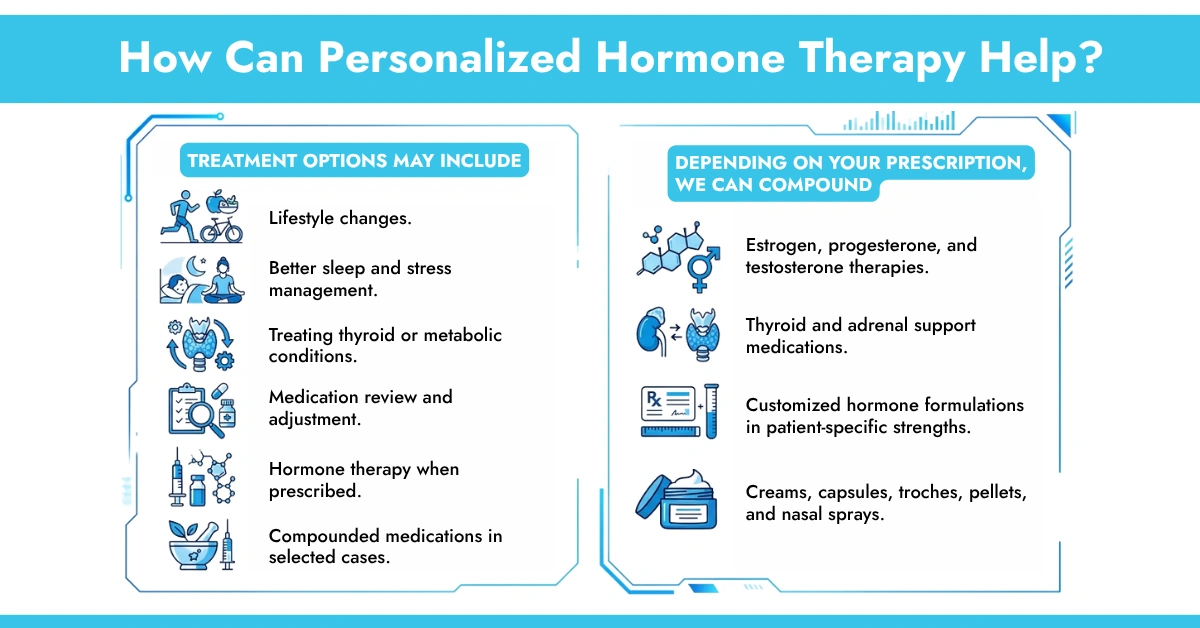
How Can Personalized Hormone Therapy Help?
Treatment for hormone imbalance depends on the underlying cause and your healthcare provider’s evaluation.
Treatment options may include:
- Lifestyle changes.
- Better sleep and stress management.
- Treating thyroid or metabolic conditions.
- Medication review and adjustment.
- Hormone therapy when prescribed.
- Compounded medications in selected cases.
When commercially available medications are not the right fit, personalized compounded hormone therapy may be prescribed to meet your individual needs. At Uptown Pharmacy, we prepare custom compounded medications based on your prescriber’s instructions to support a personalized treatment plan.
Depending on your prescription, we can compound:
- Estrogen, progesterone, and testosterone therapies.
- Thyroid and adrenal support medications.
- Customized hormone formulations in patient-specific strengths.
- Creams, capsules, troches, pellets, and nasal sprays.
Our pharmacists also provide Medication Therapy Management (MTM) to help you understand your medications, answer questions, and support safe, effective treatment.
How Long Does It Take For Hormones To Balance?
You can expect to see improvements in mood and energy within 2-4 weeks, while physical changes like hair regrowth or weight shifts usually take 3-6 months. Consistency is vital because your body needs time to adjust its internal receptors to the new hormonal balance.
The biological timeline and explanations provided align exactly with clinical expectations for both medical Hormone Replacement Therapy (HRT) and natural hormone optimization protocols.
Timeline for recovery:
- 1 month: Improved sleep and stabilized moods.
- 3 months: Notable changes in skin clarity and energy.
- 6 months: Visible signs of regrowth of hair and improved body composition on an InBody scan.
The bottom line:
Hormones modify cellular behavior slowly. Consistency is required during the first 90 days before physical changes appear.
Conclusion:
Hormone imbalance can affect far more than your energy levels. It may influence your mood, sleep, metabolism, hair health, weight, and overall quality of life. While occasional hormonal changes are a normal part of life, persistent symptoms should be evaluated by a healthcare provider to identify the underlying cause and determine the most appropriate treatment plan.
At Uptown Pharmacy, we’re committed to supporting your hormone health as prescribed by your healthcare provider. Our pharmacists work closely with you and your prescriber to help ensure your treatment is personalized, convenient, and aligned with your individual health needs. If you’re experiencing ongoing symptoms of hormone imbalance, we’re here to help you take the next step toward better health.
Disclaimer:
This content is for educational purposes only and is not medical advice. Always consult your healthcare provider before starting, stopping, or changing any medication or hormone therapy. Compounded medications require a valid prescription and are prepared based on your healthcare provider’s instructions.


