

Your stomach knots up before a big meeting. A rough week ends in three days of diarrhea, or nothing moves for a week straight. If you’ve typed can stress cause stomach problems into a search bar at 2 am, the short answer is yes, and it’s not in your head.
Your gut and brain share a direct line called the vagus nerve, tied to what Harvard Health calls the gut-brain connection, sometimes nicknamed your “second brain.” When stress hormones spike, digestion changes fast, from a knotted stomach to full-blown bowel changes.
This guide breaks down what stress actually does to your gut, which symptoms are ordinary, and which ones deserve a doctor instead of more waiting.
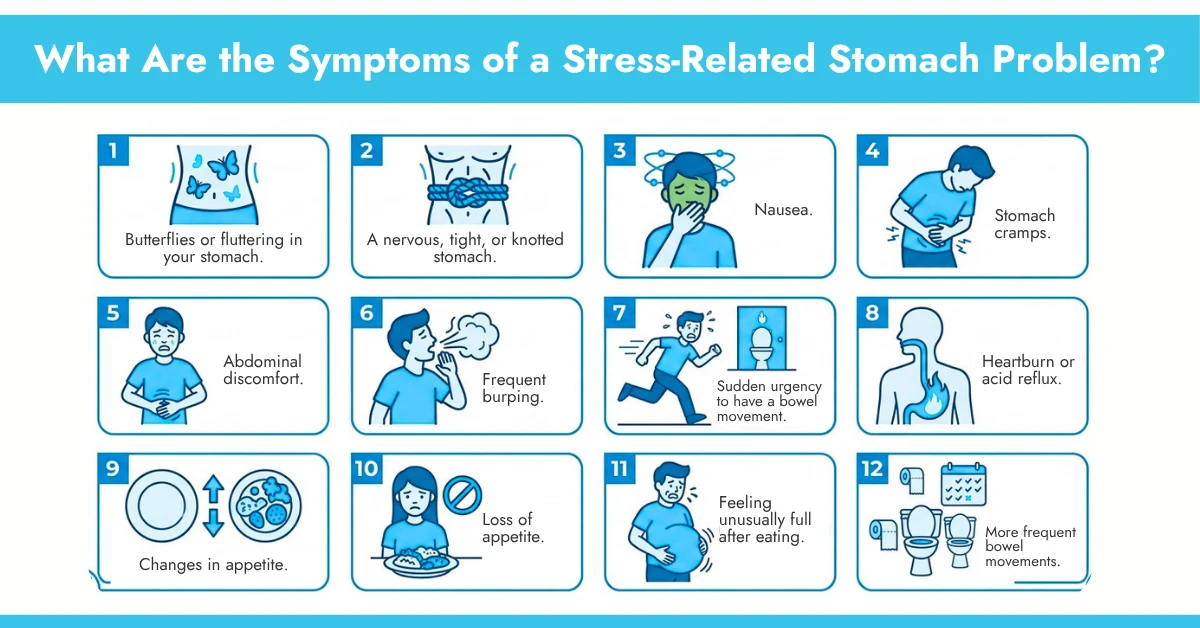
What Are the Symptoms of a Stress-Related Stomach Problem?
Stress can affect different parts of your digestive system, so symptoms vary from person to person.
Common symptoms include:
- Butterflies or fluttering in your stomach.
- A nervous, tight, or knotted stomach.
- Nausea.
- Stomach cramps.
- Abdominal discomfort.
- Frequent burping.
- Sudden urgency to have a bowel movement.
- Heartburn or acid reflux.
- Changes in appetite.
- Loss of appetite.
- Feeling unusually full after eating.
- More frequent bowel movements.
You may experience several symptoms at the same time. For example, anxiety before an important presentation may cause butterflies, nausea, stomach cramps, and an urgent need to use the bathroom.
What Does Stress Do to Your Stomach
Stress switches your body into fight-or-flight mode. Blood shifts toward your muscles and heart, away from your digestive tract, and signals along the vagus nerve get scrambled.
A few things happen at once:
- Cortisol and adrenaline hormones Mayo Clinic ties to stomach pain, bloating, and heartburn speed up or slow down the contractions that move food through your gut.
- Your gut turns more sensitive to normal activity, so ordinary gas or cramping feels sharper than on a calm day.
- About 90% of your body’s serotonin is made in the gut, not the brain, part of why mood and digestion rise and fall together.
Digestion isn’t supposed to hurt. Pain or a knotted stomach are your gut’s way of flagging that something often stress is off. Doctors group many of these reactions under disorders of gut-brain interaction: Real symptoms, no structural damage to the gut itself.
Can Stress Cause Diarrhea or Constipation?
Yes. Stress can contribute to both diarrhea and constipation. It depends on which way your nervous system reacts.
When stress speeds up colon activity, food moves through faster than your body can absorb water from it, and loose, urgent stools follow. This is common enough that “stress pooping” is a real, recognized pattern, not just a phrase people use casually.
When stress slows gut motility instead, waste sits longer, more water gets pulled out of it, and constipation sets in.
Most stress-related bowel changes settle within a few days once the stressful stretch passes. Loose stools or constipation lasting past two to three weeks, or cycling back again and again, are worth a call to your doctor rather than more waiting.
Can Stress Cause Heartburn, Acid Reflux, or Ulcers?
Stress rarely creates new stomach acid on its own, but it turns up the volume on reflux and ulcer symptoms you already have.
During a stressful stretch, the muscle that keeps acid where it belongs (the lower esophageal sphincter) can relax at the wrong moments, letting acid creep upward. Stress also slows stomach emptying for some people, giving acid more time to sit and irritate the lining, a common driver of acid reflux and indigestion.
Most stomach ulcers trace back to H. pylori bacteria or regular NSAID use (ibuprofen, naproxen), not stress by itself. Stress still plays a part: It can slow how fast an existing ulcer heals and make the pain harder to ignore.
Stress also tends to bring along habits that make reflux worse:
- Skipped meals.
- Fast eating.
- Extra caffeine.
- Late-night snacking.
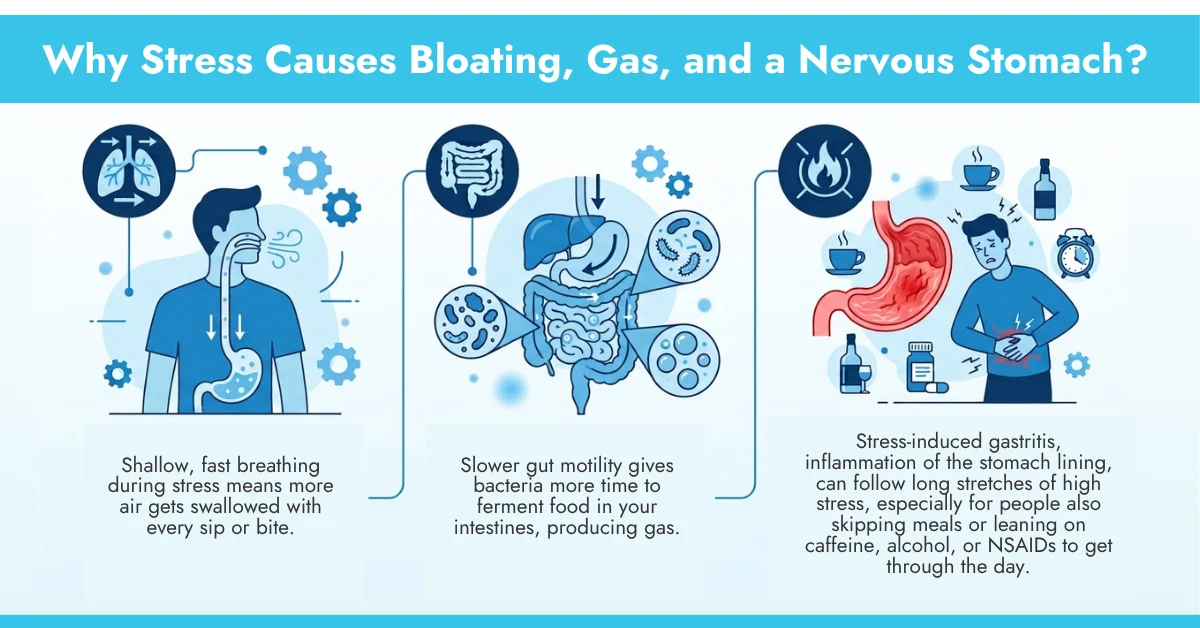
Why Stress Causes Bloating, Gas, and a Nervous Stomach?
Stress slows the muscles that push gas through your gut and gets you swallowing more air without noticing; both leave you bloated.
A few patterns show up often:
- Shallow, fast breathing during stress means more air gets swallowed with every sip or bite.
- Slower gut motility gives bacteria more time to ferment food in your intestines, producing gas.
- Stress-induced gastritis, inflammation of the stomach lining, can follow long stretches of high stress, especially for people also skipping meals or leaning on caffeine, alcohol, or NSAIDs to get through the day.
For most people, this adds up to a tight, gassy, uneasy stomach a classic nervous stomach rather than sharp pain. Bloating that comes with fever, vomiting, or pain that doesn’t ease after a bowel movement points to a gastritis flare worth a doctor’s visit rather than home care alone.
Red Flags: When Stomach Symptoms Aren’t Just Stress
Stress alone rarely causes blood in your stool, sudden weight loss, or trouble swallowing. Those symptoms deserve a doctor’s look no matter how stressed you’ve been.
Symptom | Usually just stress | Talk to a doctor |
Loose stools or a knotted stomach, under 2 weeks | Yes | |
Blood or black, tarry stool | Yes | |
Occasional mucus in stool, no other symptoms | Often | |
Weight loss you didn’t try for | Yes | |
Pain that wakes you up at night | Yes | |
Nausea with repeated vomiting | Yes |
Stress is also not the direct cause of pancreatitis (gallstones and heavy alcohol use account for most cases), gastroparesis (mainly linked to diabetes), or diverticular disease (mostly age and a low-fiber diet), though flare-ups of any of these sometimes follow rough stretches, which is worth flagging to your doctor rather than sorting out on your own.
What Actually Settles a Stress Stomach
Small, calm meals and a few minutes of slow breathing do more for a stress stomach than any single product on a shelf.
- Eat smaller meals more often instead of three large ones; a full stomach digests slower under stress and bloats more.
- Cut back on caffeine, alcohol, and carbonated drinks during a rough stretch; all three worsen reflux and gas.
- Peppermint tea or capsules ease cramping and gas for a lot of people with a stress-sensitive gut.
- A short walk after eating speeds gut motility and eases that heavy, bloated feeling.
- Five minutes of slow, deep breathing calms the vagus nerve directly and takes pressure off digestion.
Symptoms tied to a new prescription, a recent antibiotic, or a daily NSAID are worth a Medication Therapy Management review with an Uptown Pharmacy pharmacist; it sorts out whether a drug is the real trigger, not stress. Magnesium glycinate and probiotic blends from our shop come up often for regularity and gut comfort; check with a pharmacist first if you’re pregnant, nursing, or on other medication.
Conclusion:
Can stress cause stomach problems? Yes. The gut and brain communicate continuously, and stress can change digestive movement and sensitivity. That can lead to butterflies, nausea, diarrhea, constipation, bloating, gas, abdominal discomfort, or reflux symptoms.
A stressed-out gut is common, and most of it settles with time, smaller meals, and slower breathing. If your symptoms don’t fit that pattern, or you’re just not sure, call Uptown Pharmacy at (214) 935-9092 or send our team a message through our contact page. A quick conversation with a pharmacist often sorts out what’s stress and what isn’t.


