

If you’re noticing a receding hairline or the top of your head catching more light than it used to, you’re dealing with one of the most common and most misunderstood conditions in men’s health. Male pattern baldness, known clinically as androgenetic alopecia, affects roughly half of men by age 50. It comes from genetics and a hormone called DHT, not from hats, shampoo, or how often you wash your hair.
Here’s what’s actually happening on your scalp, which treatments have real evidence behind them, and when it’s worth calling a pharmacist.
What Causes Hair Loss in Men?
Most hair loss in men is androgenetic alopecia, a genetic condition where scalp follicles shrink over repeated growth cycles in response to DHT. It isn’t caused by hats, dirty hair, or hair products; those are myths.
- DHT-sensitive follicles produce progressively thinner, shorter hairs until they stop growing visible hair at all, a process called miniaturization.
- Other, less common causes can mimic pattern baldness: Thyroid conditions, iron deficiency, certain medications, and high stress can all thin hair through different mechanisms.
- Sudden, patchy, or itchy hair loss usually points to something other than androgenetic alopecia and is worth a look from a provider.
How Do Testosterone & DHT Actually Cause Balding?
Testosterone itself doesn’t shrink hair follicles. An enzyme called 5-alpha-reductase converts part of it into dihydrotestosterone (DHT), and DHT is what binds to receptors in genetically sensitive follicles and shrinks them. That’s why blood testosterone level alone doesn’t predict who goes bald; follicle sensitivity to DHT does.
This is also why testosterone replacement therapy (TRT) raises questions for a lot of men. Research from Baylor College of Medicine found TRT can raise DHT two to three times above baseline, depending on dose and how it’s taken. TRT doesn’t create hair loss out of nowhere; it mainly speeds up a pattern in men already genetically prone to it. If hair loss runs in your family and you’re starting TRT, mention it to your prescriber beforehand.
Is Male Pattern Baldness Genetic?
Yes. One well-studied gene tied to hair loss, the androgen receptor gene, sits on the X chromosome, which sons inherit only from their mother, according to Cleveland Clinic. That’s where the “it comes from your mom’s side” idea started. Research has since linked other contributing genes on several different chromosomes, inherited from either parent: one study found sons of balding fathers have 5 to 6 times the relative risk of developing the condition themselves.
Because so many genes are involved, expression varies a lot between relatives; a man can inherit fewer of the relevant variants than his father did, which is part of why baldness can look like it “skips” a generation, even though the genes themselves don’t disappear.
At What Age Do Men Typically Start Losing Hair?
Androgenetic alopecia can begin any time after puberty. Clinicians classify onset before age 30 as early-onset, sometimes called premature balding. By age 50, roughly half of men show some degree of pattern hair loss; by 70, that climbs to about 80%, according to research on the NIH’s StatPearls platform.
Starting in your late teens or twenties isn’t rare or abnormal; it’s the same genetic process showing up earlier. It can also feel more unsettling at that age, which is exactly when getting an accurate read on what’s happening, rather than guessing, matters most.
What Are the Stages of Male Pattern Baldness?
Dermatologists track male hair loss using the Norwood-Hamilton scale, a seven-stage system (I through VII) that follows recession at the hairline and temples alongside thinning at the crown, or vertex (what’s often called vertex baldness). You may also see the Ludwig scale mentioned online; that one classifies female pattern hair loss, not men’s, so mixing the two up is a common but easy-to-fix error.
|
Norwood Stage |
What You’ll Typically Notice |
|
I-II |
Little to no recession; a slightly higher, more “adult” hairline is normal aging, not balding |
|
III |
Clear recession at the temples, generally the earliest stage clinicians classify as true balding |
|
III Vertex |
Temple recession plus visible thinning at the crown |
|
IV-V |
Hairline recession and crown thinning grow closer together, separated by a band of hair |
|
VI-VII |
The band connecting the sides disappears, leaving a horseshoe-shaped fringe |
Which Treatments for Male Pattern Baldness Actually Work?
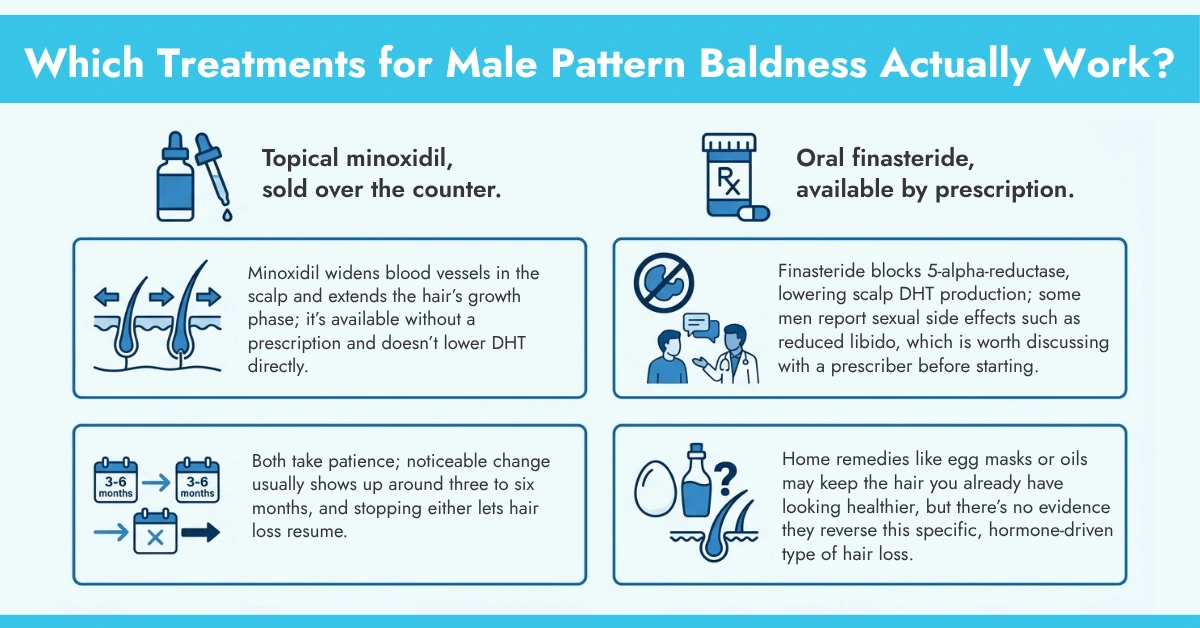
Two treatments carry FDA approval specifically for androgenetic alopecia:
- Topical minoxidil, sold over the counter.
- Oral finasteride, available by prescription.
The American Academy of Dermatology reports both can grow back hair or slow further loss in many men, though they work differently and neither works for everyone.
- Minoxidil widens blood vessels in the scalp and extends the hair’s growth phase; it’s available without a prescription and doesn’t lower DHT directly.
- Finasteride blocks 5-alpha-reductase, lowering scalp DHT production; some men report sexual side effects such as reduced libido, which is worth discussing with a prescriber before starting.
- Both take patience; noticeable change usually shows up around three to six months, and stopping either lets hair loss resume.
- Home remedies like egg masks or oils may keep the hair you already have looking healthier, but there’s no evidence they reverse this specific, hormone-driven type of hair loss.
You can browse minoxidil and hair care options in the Uptown Pharmacy shop, or talk with a pharmacist about whether a prescription option makes sense for you.
Can Male Pattern Baldness Be Reversed?
Follicles that are miniaturized but still alive can often regrow visible hair once DHT exposure is reduced; that’s the “reversal” most men are hoping for. Follicles that have fully scarred over can’t be revived by minoxidil or finasteride, which is the real reason dermatologists recommend starting treatment as soon as a pattern is noticeable rather than waiting it out.
An early bald spot or a hairline that’s just starting to move is easier to work with than one that’s been established for years. If you’re managing TRT or other prescriptions alongside a hair loss treatment, Uptown Pharmacy’s Medication Therapy Management service can review everything together for interactions and timing.
What Can Make Hair Loss Look Worse?
Not every change in hair density means your male pattern baldness is progressing.
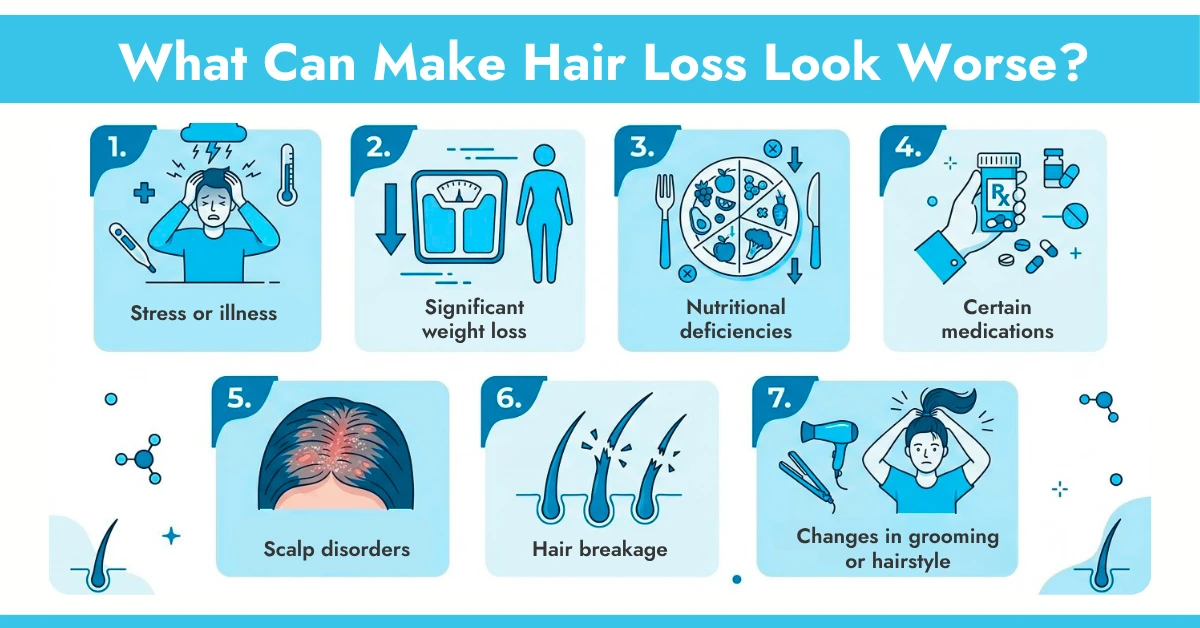
Hair appearance can also change because of:
- Stress or illness.
- Significant weight loss.
- Nutritional deficiencies.
- Certain medications.
- Scalp disorders.
- Hair breakage.
- Changes in grooming or hairstyle.
These conditions can sometimes occur alongside androgenetic alopecia, making the overall picture harder to interpret. If shedding is sudden or widespread rather than following the typical temple-and-crown pattern, speak with a healthcare professional.
Conclusion:
None of this is something you need to work out alone. If you want to compare treatment options, check for interactions with medications you already take, or just talk through what stage you’re at Uptown Pharmacy’s licensed pharmacists are a call away. Already started treatment elsewhere? Transfer your prescription to Uptown Pharmacy and pick up the conversation from there.
Disclaimer:
This article is educational and isn’t a substitute for advice from your own doctor or pharmacist. Talk with your prescriber or an Uptown Pharmacy pharmacist before starting, stopping, or combining any hair loss treatment, especially if you’re also on testosterone therapy or other prescription medications.


