

Walk down any skincare aisle or scroll social media for five minutes and you’ll see anti-aging and healthy aging used like they’re the same thing. They’re not. One is mostly about how you look. The other is about how well your body actually works as the years add up and mixing the two up is how people end up with a shelf full of products and no real plan.
This guide breaks down the real difference between them, which anti-aging ingredients and treatments actually have research behind them, where newer options like NAD+ supplements and off-label longevity drugs stand right now, and since we’re pharmacists first the interaction risk nobody mentions when you start stacking supplements on top of medications you’re already taking.
What Is the Difference Between Healthy Aging and Anti-Aging?
Anti-aging usually means making the visible signs of getting older less noticeable: Wrinkles, age spots, thinning skin. Healthy aging means keeping your body working well as you age, steady blood sugar, strong muscles, good sleep, a medication list that still makes sense. They overlap, but they aren’t interchangeable, and most content treats them like they are.
Healthy Aging | Anti-Aging | |
Main goal | Function, mobility, and health over time | Fewer visible signs of aging |
Typical tools | Diet, movement, sleep, medication reviews, screenings | Retinoids, serums, supplements, procedures |
Research base | Long-established in geriatric and preventive medicine | Ranges from strong (SPF, tretinoin) to early (NAD+, rapamycin) |
Timeline | Cumulative, builds over decades | Often marketed as fast, visible results |
Where they meet | Sun protection, movement, and not smoking help both | Healthy habits are what make the products work better |
Neither one replaces the other. A skincare routine works better on a body that’s sleeping and moving well, and no lifestyle is healthy enough to undo years of unprotected sun exposure.
What Are the Early Signs of Skin Aging & What Do They Actually Mean?
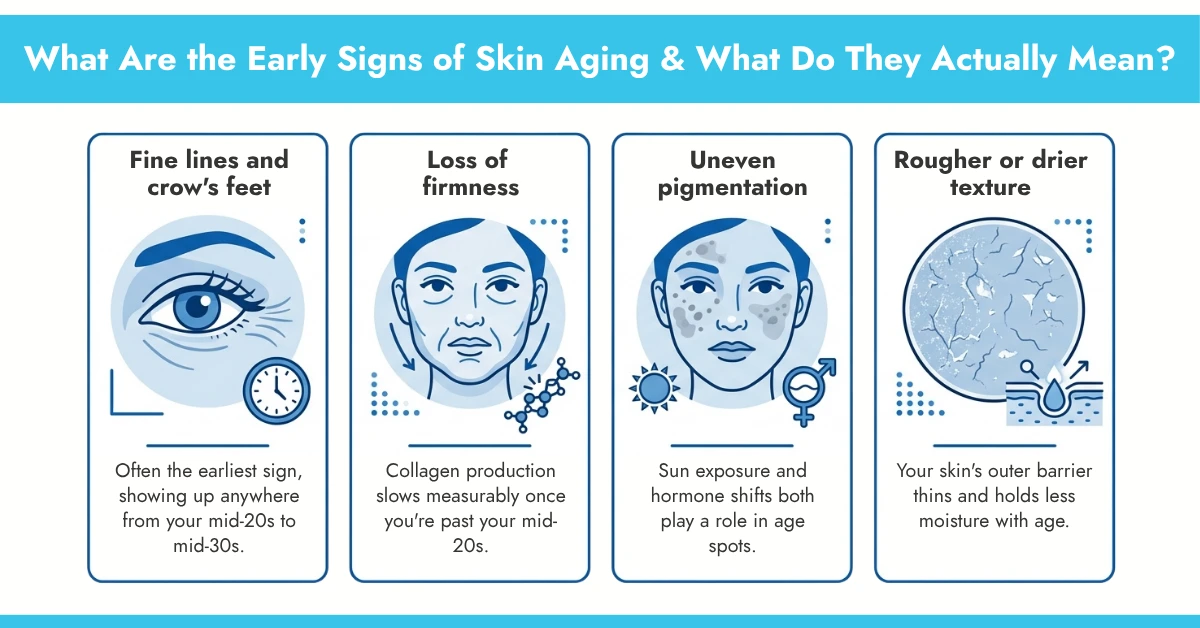
The first signs are usually fine lines around the eyes, less bounce-back in the skin (loss of elasticity), and uneven tone or dark spots. These come from a mix of slowing collagen production, sun exposure, and separate from your skin, how your whole body is aging on the inside, sometimes called your physiological age.
- Fine lines and crow’s feet: Often the earliest sign, showing up anywhere from your mid-20s to mid-30s.
- Loss of firmness: Collagen production slows measurably once you’re past your mid-20s.
- Uneven pigmentation: Sun exposure and hormone shifts both play a role in age spots.
- Rougher or drier texture: Your skin’s outer barrier thins and holds less moisture with age.
Which Skincare Ingredients Are Actually Worth Using?
Only a handful of ingredients have real research behind them for slowing visible skin aging: retinoids (prescription tretinoin or OTC retinol), vitamin C, peptides, and more than any of them, daily SPF. Everything else on the shelf ranges from doing a little something to mostly marketing.
- Retinol (OTC): Gentler, needs to convert in your skin first, so results take longer; a solid starting point if you’re new to actives
- Tretinoin (prescription only): Already active on contact, works faster and stronger, but needs a prescription and usually more skin tolerance
- Vitamin C serum: Brightens tone and speeds repair from sun damage; layers well under SPF
- Peptides: Signal your skin to keep producing its own collagen, gentler than retinoids
- SPF 30+, every day: The single habit the American Academy of Dermatology points to most often for preventing premature aging; skip this and the rest barely matters
You can browse OTC options, including retinol and vitamin C formulas, in our skincare and supplement shop.
Do NAD+ & Other Longevity Supplements Actually Work?
The honest answer: not proven yet, at least not in people. Lab and animal research on NAD+ boosters like NMN and NR looks promising for cellular energy and aging markers, but large human trials are still limited. Worth knowing: NMN’s legal status flipped recently; the FDA excluded it from the dietary supplement category in 2022, then reversed that decision in late 2025, so it’s back on shelves as a legal supplement in 2026.
Other popular options: collagen peptides, resveratrol, CoQ10 sit in the same spot: early, encouraging, not proven. By law, none of them can claim to treat, cure, or prevent any disease, and these claims haven’t been evaluated by the FDA the way a drug’s claims are.
There’s a real interaction risk here, too. Resveratrol and high-dose fish oil can both affect blood clotting, worth flagging if you’re on a blood thinner. This is exactly the kind of stacking a medication therapy review catches before it becomes a problem.
Related Topic: What Is NAD+? Benefits, Side Effects, Dosage & Safety
What Is Age-Management Medicine & Should You Consider It?
Age-management medicine is a growing field where physicians prescribe treatments off-label for aging itself, most often metformin (a diabetes drug), rapamycin (originally for organ transplant rejection), and sometimes hormone therapy for age-related hormone decline. None of these are FDA-approved specifically for anti-aging. All of them require a prescription and physician monitoring.
A quick pros and cons check:
What draws people to it:
- Decades of safety data from their original, approved uses.
- Real, active research: a large metformin-and-aging trial is in the works, and a year-long rapamycin safety study found no more side effects than placebo at low, intermittent doses.
- Can be paired with bloodwork and physician monitoring.
What to weigh first:
- No human trial has shown either drug extends lifespan; the anti-aging benefit isn’t confirmed
- Long-term safety data in otherwise-healthy adults is still limited
- These require ongoing physician oversight, not self-sourcing or self-dosing
If you’re curious, the right first step is a conversation with your prescriber, not a supplement forum. Our pharmacists check for interactions if you’re already managing other conditions or medications.
How Can You Support Healthy Aging Through Daily Habits?
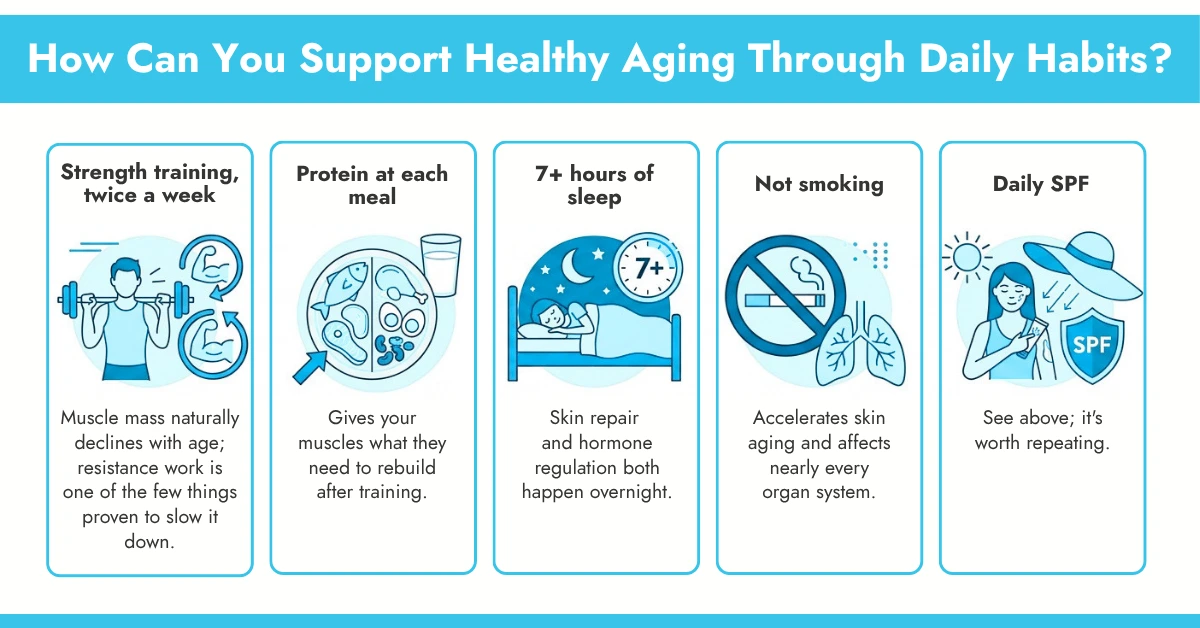
The habits with the strongest research behind them are strength training, protein intake, sleep, and not smoking. None of them are glamorous. None of them are optional if the goal is actually staying healthy, not just looking younger.
- Strength training, twice a week: Muscle mass naturally declines with age; resistance work is one of the few things proven to slow it down.
- Protein at each meal: Gives your muscles what they need to rebuild after training.
- 7+ hours of sleep: Skin repair and hormone regulation both happen overnight.
- Not smoking: Accelerates skin aging and affects nearly every organ system.
- Daily SPF: See above; it’s worth repeating.
How Do You Actually Build a Routine That Covers Both?
Start with the habits, sleep, movement, SPF, protein. Add one or two skincare actives that actually have research behind them. Before adding any supplement or off-label medication on top of that, get your full list reviewed for interactions. That’s the step most people skip, and it’s the one a pharmacist is actually trained for.
Healthy aging and anti-aging aren’t competing goals. One is about how you’ll feel and function in twenty years. The other is about how you look this year. The routines that work answer both, without stacking supplements or prescriptions on top of what you’re already taking, unchecked.
Conclusion:
The biggest difference between healthy aging and anti-aging is the goal. Anti-aging often focuses on reducing visible signs of getting older, while healthy aging focuses on maintaining your health, strength, mobility, and quality of life.
If you’re taking medications and considering adding supplements or new treatments, talk with a pharmacist or other healthcare professional first. A medication review can help you understand what you’re already taking and identify potential interactions.
Disclaimer:
This article is for general education and isn’t a substitute for advice from your own doctor or pharmacist. Talk to a healthcare provider before starting any new supplement or medication, especially if you’re already taking something else.


