

You’ve seen NAD+ on supplement bottles, IV drip menus, and skincare labels, with claims running from “more energy” to “reverses aging.”
Here’s the grounded version: NAD+ is a coenzyme every cell in your body has used since before you were born, mostly to turn food into usable energy. Levels drop with age; that part is well documented. Whether raising NAD+ with a pill, patch, or IV changes how you feel is a separate, less settled question, and it’s one the team at Uptown Pharmacy gets asked about often.
This page covers what NAD+ does, which supplement forms are legal to buy right now, real trial dosages, and who should skip it.
What Is NAD+ & What Does It Do?
NAD+ stands for nicotinamide adenine dinucleotide. It is a coenzyme found in every cell in the human body.
It helps transfer electrons during metabolic reactions. In simple terms, NAD+ helps your body turn nutrients from food into usable cellular energy, including ATP.
NAD+ also supports enzymes involved in:
- Sirtuins: Involved in gene regulation and cell repair.
- PARPs: Repair damaged DNA.
- CD38: Breaks NAD+ down, and gets busier as you age.
NAD+ levels fall substantially with age. Human and animal studies consistently show the decline, though the exact rate varies by tissue and study, as Cleveland Clinic notes in its overview of the molecule.
What’s the Difference Between NAD+ and NADH?
NAD+ and NADH are two states of one molecule, not separate substances.
- NAD+ is the “empty,” oxidized form ready to pick up electrons.
- NADH is the “charged,” reduced form already carrying them.
Cells flip between the two constantly. The NAD+/NADH ratio tells researchers how a cell is managing its energy supply, and an off-balance ratio shows up in conditions like fatty liver disease and certain metabolic disorders.
What Are NAD+ Supplements?
NAD+ products can contain NAD+ itself or, more commonly, precursors that the body uses to support NAD+ production.
Common NAD+ precursors include:
- Niacin (nicotinic acid).
- Nicotinamide (niacinamide).
- Nicotinamide riboside (NR).
- Nicotinamide mononucleotide (NMN).
The FDA pulled NMN from the legal definition of a dietary supplement in November 2022, and a lot of content still online repeats that as current fact. It isn’t: the FDA reversed course on September 29, 2025, and NMN tablets and capsules are back on shelves.
Do precursors work? Trials confirm they raise blood NAD+ levels, sometimes 40-60% within weeks. Whether that translates into something you’d notice day to day is less settled; a 2023 review of published human trials found the physical payoff of raising NAD+ still isn’t clear.
What Are the Potential NAD+ Benefits?
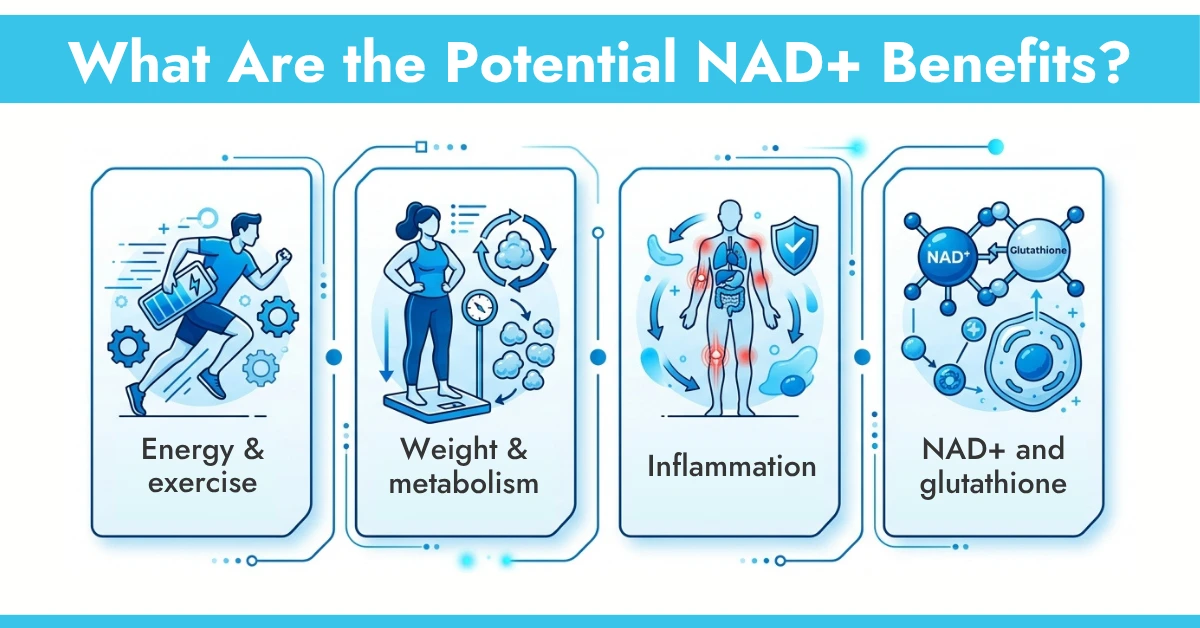
Marketing pages promise NAD+ will fix energy, weight, and skin all at once. Real research, summarized well by Cleveland Clinic, paints a narrower picture.
- Energy & exercise: NAD+ sits at the center of how mitochondria make ATP, so the logic behind an energy link makes sense on paper. Trials on NR and NMN show gains in grip strength and gait speed among older adults, but a felt lift in everyday energy hasn’t shown up consistently.
- Weight & metabolism: Animal data looks strong for fat and glucose metabolism. Human data is thinner; one small trial in postmenopausal women with prediabetes found 250 mg/day of NMN raised muscle insulin sensitivity over ten weeks, though weight loss itself hasn’t turned up as a direct outcome in human trials.
- Inflammation: NAD+ feeds the CD38 and sirtuin pathways that shape inflammation, and the direction of that effect shifts with tissue type and dose, one of the least settled corners of NAD+ research.
- NAD+ and glutathione: Both sit inside the body’s redox system, which is why clinics often pair them in one IV bag. The biochemical link is real; a distinct outcome from combining them hasn’t turned up in published research.
Is NAD+ a Peptide? Pros and Cons
No, NAD+ is not a peptide. Peptides are short chains of amino acids, like BPC-157 or collagen peptides. NAD+ is a dinucleotide, a different chemical family entirely. The mix-up happens because wellness clinics often list NAD+ on the same treatment menu as peptides.
For skin and hair, interest centers on NAD+’s role in DNA repair and cell turnover. The “before and after” claims circulating online are mostly testimonials, not published trial results.
Pros of NAD+ supplements:
- Raises measurable blood NAD+ levels in published trials.
- Sold in multiple forms and price points.
- Short-term trials show a clean safety record for oral NR and NMN.
- A molecule your body already knows how to use, unlike a synthetic drug.
Cons of NAD+ supplements:
- Human evidence for felt outcomes (energy, weight, mood) is thin next to the marketing around it.
- No long-term, multi-year human safety data exists yet.
- Spray, patch, and IV forms cost more, with less published evidence behind the delivery method itself than capsules have.
- Supplements aren’t FDA-checked for potency before sale, so quality varies by brand.
What’s the Best Way to Take NAD+?
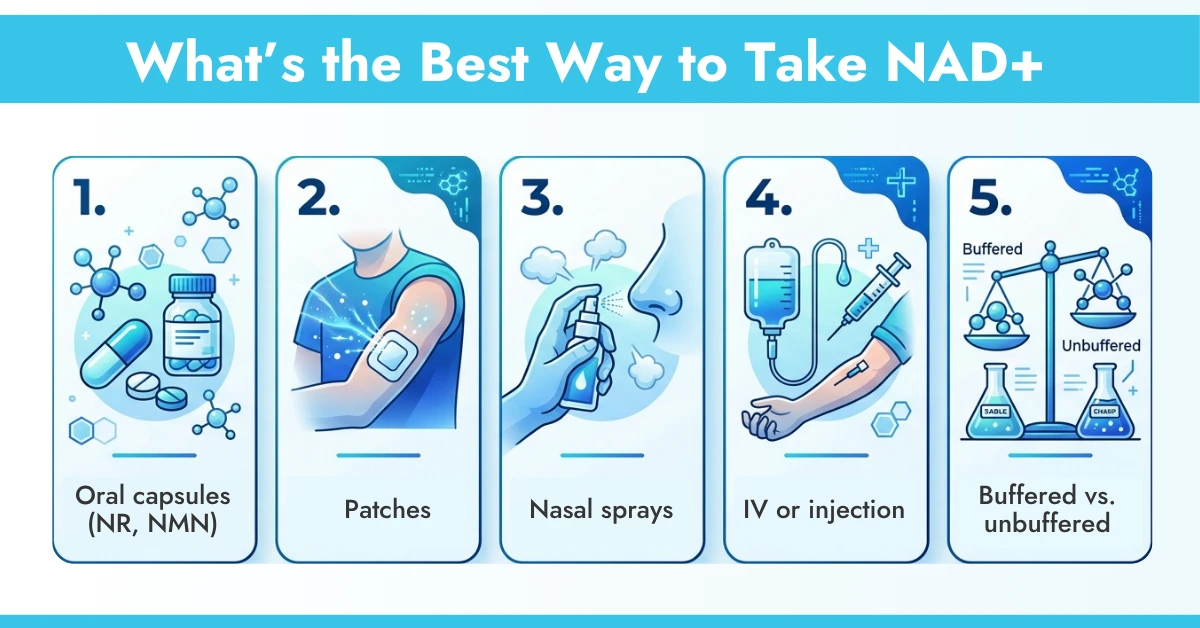
NAD+ and its precursors now come as capsules, tablets, sublingual drops, transdermal patches, nasal sprays, and clinic-administered IV drips or injections.
- Oral capsules (NR, NMN): The lowest theoretical absorption, but by far the largest body of published human trial data behind them.
- Patches: A slow release through the skin, but head-to-head human absorption data specific to patches is scarce.
- Nasal sprays: Marketed as a route around digestion, with faster onset claimed. No published human study has directly measured NAD+ absorption through a nasal spray, the pitch runs ahead of the evidence.
- IV or injection: The highest bioavailability, given in a clinical setting, and the source of most flushing, nausea, and chest-tightness reports, especially with a fast infusion rate.
- Buffered vs. unbuffered: Buffered powders and capsules are adjusted to a less acidic pH, which can ease stomach upset for people sensitive to raw nicotinic acid or NMN powder.
What Are the Side Effects & Dosage of NAD+?
Oral NAD+ precursors show a mild side-effect profile across the trials published so far. Mild and studied-for-years aren’t the same thing, though.
Common with oral NR/NMN:
- Nausea or stomach discomfort.
- Headache.
- Fatigue.
- Flushing, particularly with nicotinic acid (niacin).
More pronounced with IV or injection: flushing, chest tightness, or a fast heartbeat, tied to how quickly the infusion runs.
Human research has examined a range of doses, including:
Nicotinamide riboside: 250-1,000 mg/day.
- NMN: 250-1,200 mg/day.
- Niacin: Kept well under the 35 mg/day upper limit set for supplements, unless a doctor is managing a higher medical dose.
Important dosage note:
These amounts are provided for informational and research-reference purposes only. They are not a recommended dose or personal treatment plan. NAD+ products vary in ingredient, formulation, concentration, and quality. Talk with a pharmacist or healthcare professional before choosing a dose.
Who Should Talk to a Pharmacist Before Taking NAD+?
- Pregnant or breastfeeding; human safety data doesn’t exist yet.
- Managing a personal or family cancer history; NAD+ feeds all cells, including ones you’d rather not fuel.
- Taking prescription medication, since NAD+ pathways cross several drug-metabolism routes.
A quick conversation with Uptown Pharmacy’s Medication Therapy Management team can catch an interaction before it becomes a problem.
Can You Raise NAD+ Naturally Through Food and Lifestyle?
Food won’t raise NAD+ the way a 1,000 mg NR capsule can, but it lays the groundwork your body needs to make its own.
Niacin-rich foods, per the NIH Office of Dietary Supplements:
- Poultry, beef, pork, and fish.
- Peanuts and other legumes.
- Fortified breads and cereals.
Adults need 14-16 mg of niacin a day from food, and most people reach that number without trying.
Lifestyle also matters:
- Exercise raises NAD+ turnover in muscle.
- Time-restricted eating is linked to higher NAD+ in animal studies.
- Poor sleep and regular alcohol use both speed up NAD+ depletion.
Timing: Morning dosing is common, since a mild energy lift can interfere with sleep if taken late in the day. No trial has settled on one best time.
Conclusion:
NAD+ plays an essential role in cellular energy production, DNA repair, and other processes throughout the body. Supplements such as NR and NMN can raise NAD+ levels in humans, but evidence that this consistently improves energy, weight, aging, or other everyday outcomes is still developing. The doses discussed in this article reflect amounts used in research, not instructions for self-treatment. If you’re considering an NAD+ supplement, review the specific product and your medications with a pharmacist or healthcare professional first.
Questions about NAD+ and your current medications? Uptown Pharmacy’s licensed team can walk through your specific situation. Call, visit, or use the contact page, and browse vitamins and supplements while you’re there.
Disclaimer:
This article explains general research and isn’t personalized medical advice. Talk with a pharmacist or doctor before starting any new supplement, especially if you take prescription medication or are pregnant or breastfeeding. Don’t start, stop, or change any medication or treatment based solely on this information.


