

You’re dragging by mid-afternoon. Your lower back aches. Or maybe a lab report came back with a flagged vitamin D number and now it’s midnight and you’re googling. Vitamin D deficiency is common, so the worry makes sense.
One caution before we go on. Many things cause the symptoms below, and nobody can diagnose deficiency from symptoms alone. Here we cover what causes it, how testing works, what your results mean, and what you can do about them.
What Does Vitamin D Deficiency Mean?
Your body isn’t getting enough vitamin D to do its job. That job is mostly helping you absorb calcium so your bones stay strong.
Plenty of people with low levels feel fine. The only way to know is a blood test, read by a healthcare professional who knows your history. And no single cutoff has every expert’s agreement. More on that shortly.
Vitamin D Deficiency Symptoms: What Can Low Vitamin D Feel Like?
The signs are sneaky. When they do show up, they tend to look like this:
- Bone pain: A deep ache, often in the lower back, hips, or legs.
- Muscle aches or weaknesses: Stairs feel steeper. Getting out of a low chair takes a push.
- Bone problems: In severe, long-running cases, bones can soften and break more easily.
- Nothing at all: Honestly, this is the most common one.
Tiredness and low mood get blamed on vitamin D constantly. Sometimes that’s right. But poor sleep, thyroid trouble, anemia, and plain old stress cause them too, so treat them as hints, not proof. Kids are a different story. Severe deficiency in childhood can cause rickets, which softens growing bones.
Vitamin D Deficiency Causes and Risk Factors
Your level can drop in three ways. You take in too little. Your gut doesn’t absorb what you do take in. Or your body struggles to convert vitamin D into its usable form.
So who’s more likely to run low?
- People who get little sun, whether from indoor work, covering up, or long winters
- Older adults, since skin makes less vitamin D with age
- People with darker skin, which makes vitamin D from sunlight more slowly
- People with higher body weight
- Anyone with a gut condition that affects absorption, or who’s had bariatric surgery
- People with kidney or liver disease
- Anyone on certain medicines, such as long-term steroids
A risk factor isn’t a diagnosis. It just means the question deserves a look.
How Is Vitamin D Deficiency Diagnosed?
Doctors use the 25-hydroxyvitamin D blood test, written 25(OH)D. It’s the standard check. It makes the most sense when there’s a reason behind it, like bone pain, a gut or kidney condition, or a history of fragile bones. Testing every single person is a separate argument.
And the experts haven’t settled it. The U.S. Preventive Services Task Force found the evidence too thin to recommend for or against screening. That applies to adults who aren’t pregnant and have no symptoms. It doesn’t cover people who already have a condition where vitamin D treatment is recommended.
Vitamin D Test Results and the Normal Range
Your report might list ng/mL, nmol/L, or both. Don’t let the units rattle you. Multiply ng/mL by 2.5 and you’ve got nmol/L.
Here’s how the National Academies framework reads those numbers, as summarized by the NIH:
Result (ng/mL) | Result (nmol/L) | What it generally means |
Below 12 | Below 30 | Deficiency |
12 to under 20 | 30 to under 50 | Too low for bone and overall health |
20 or higher | 50 or higher | Enough for most healthy people |
Above 50 | Above 125 | Possible harm |
Now the part most articles skip, these ranges aren’t universal. The Endocrine Society draws the line higher, at 30 ng/mL, and plenty of labs flag anything under that. The same number can look fine on one report and low on another.
Even with identical lab results, the meaning can shift based on your age, symptoms, medications, and other health conditions. The NIH Office of Dietary Supplements vitamin D fact sheet has more on the categories of vitamin D status. Your clinician can tell you what your number means for you.
Treating Vitamin D Low Levels: What Happens Next?
There’s no single plan. Treatment depends on your lab number, your age, your health history, and what’s likely causing the low level in the first place.
For some people that means a supplement. For others it’s a few easy diet changes, a closer look at something else going on in the body, or just a retest in a couple of months. Often it’s a mix.
Why More Isn’t Better
Vitamin D can overshoot. Too much can push the calcium in your blood to unhealthy levels, and that’s a real problem, not a theoretical one.
It happens more easily than you’d think. Vitamin D hides in multivitamins, calcium pills, and bone health formulas, so you can end up taking it two or three times over without realizing. Some medications interact with it too. The NIH explains supplement safety and medicine interactions in plain language, and it’s worth a read.
Not sure what’s overlapping in your cabinet? Ask a pharmacist. Bring everything you take, bottles and all. We’ll spot the doubles.
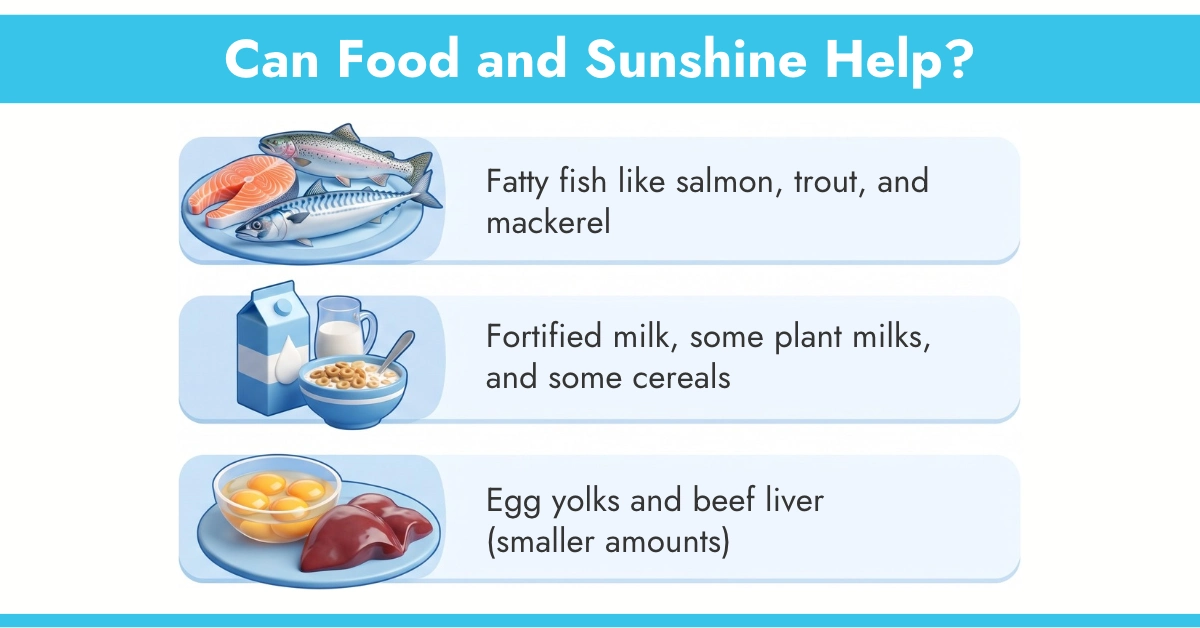
Can Food and Sunshine Help?
A few foods carry vitamin D:
- Fatty fish like salmon, trout, and mackerel
- Fortified milk, some plant milks, and some cereals
- Egg yolks and beef liver (smaller amounts)
Fortification varies a lot from brand to brand, so check the label.
Sunlight helps your skin make its own vitamin D, but how much depends on the season, where you live, your skin tone, and how long you’re outside. Too much sun raises skin cancer risk. So there’s no magic number of minutes here, and we won’t pretend there is one.
Food and sun can support your intake. But if you’ve been diagnosed with a deficiency, don’t count on them alone. Your care team sets the plan.
Vitamin D Deficiency and Bone Health
Vitamin D helps your gut absorb calcium. Without enough of it, bones can’t harden the way they should. Severe, long-term deficiency can lead to osteomalacia in adults, meaning soft, painful bones, and to rickets in children.
Osteoporosis is a cousin, not a twin. One low result doesn’t mean you have it, and supplements don’t automatically prevent fractures.
Questions to Ask About a Low Vitamin D Result
Was my test a 25(OH)D test?
- Which unit is on my report, and what range does this lab use?
- How does the number fit my symptoms and health history?
- Could a medicine or an absorption problem be dragging my level down?
- Do I need a specific plan, and when should I retest?
Conclusion
Sorting out vitamin D deficiency starts with a proper test and a real conversation with your clinician. If supplement or medicine questions pop up along the way, the pharmacists at Uptown Pharmacy in Dallas can help you work through them.
Disclaimer: This article is educational and isn’t a substitute for personal medical advice. Reviewed by a licensed pharmacist at Uptown Pharmacy.


