

Fiber for gut health does more than keeping bowel movements regular. Certain types feed gut bacteria, while others add bulk to stool. Your best choices depend on your diet, digestive symptoms, and personal tolerance. You do not need an expensive supplement or a special diet to start eating more fiber. Everyday foods like beans, oats, fruits, and vegetables give you several ways to add it to your meals.
What Does Fiber for Gut Health Do?
Your body cannot fully digest many types of dietary fiber. The fiber travels through your digestive system, where it performs several jobs.
Here are three key benefits of fiber for gut health worth knowing:
- Bowel regularity: Fiber can add bulk to stool, while certain types absorb water and form a gel that affects stool consistency.
- Gut bacteria: Certain fibers act as prebiotics, giving specific gut microorganisms fuel to grow and stay active.
- Intestinal health: Gut bacteria ferment some fibers and produce short-chain fatty acids, including butyrate. These compounds play a role in normal colon function.
Fiber for gut health supports a diverse gut microbiome, but different types of fiber interact with beneficial microorganisms in different ways. Increasing fiber intake does not guarantee that every digestive symptom will disappear. Your food choices, existing health conditions, and individual tolerance all play a role in maintaining digestive health.
Some drinks contain added prebiotic fiber, but the ingredients and amounts vary. Uptown Rx Pharmacy carries the Wildwonder Cherry Lemonade Sparkling Prebiotic Drink, which you can review to check its fiber content and ingredients.
Soluble vs. Insoluble Fiber: Which Is Better for Gut Health?
Both types belong to a varied diet. They perform different jobs, so choosing one over the other is rarely necessary.
Fiber type | What it does | Food sources |
Soluble fiber | Dissolves in water and forms a gel-like substance | Oats, beans, apples, psyllium |
Insoluble fiber | Adds bulk to stool and aids its movement through the digestive tract | Whole grains, wheat bran, vegetables |
Prebiotic fiber | Feeds certain gut microorganisms | Onions, garlic, some other plant foods |
Resistant starch | Escapes digestion in the small intestine and can be fermented in the colon | Legumes and some cooked-and-cooled starchy foods |
When choosing fiber for gut health, remember that these categories can overlap. Some soluble fibers also act as prebiotics, while many plant-based foods contain several types of fiber that support digestion in different ways.
Which fiber should you choose?
Eat a mix of fiber-rich foods if your digestion tolerates them. If constipation or IBS causes ongoing problems, ask a healthcare professional about suitable fiber sources. The American College of Gastroenterology recommends psyllium for overall IBS symptom improvement but does not recommend wheat bran for that purpose.
What Are the Best High-Fiber Foods for Gut Health?
You can get plenty of fiber for digestive health from ordinary grocery-store foods. You do not need a special powder to start eating more fiber.
Food | Serving size | Approximate fiber |
Black beans, cooked | ½ cup | 7.5 g |
Lentils, cooked | ½ cup | 8 g |
Chickpeas, cooked | ½ cup | 6 g |
Raspberries | 1 cup | 8 g |
Pear with skin | 1 medium | 5.5 g |
Oatmeal, cooked | 1 cup | 4 g |
Broccoli, cooked | ½ cup | 2.5 g |
Fiber amounts are approximate. The variety, preparation, and product can change the final amount.
You can fit these high-fiber foods into meals you already enjoy:
- Breakfast: Stir berries into oatmeal or choose a whole-grain cereal.
- Lunch: Add beans or chickpeas to a salad, soup, or grain bowl.
- Dinner: Serve lentils or vegetables alongside your usual meal.
- Snacks: Eat a pear, an apple with its skin, or another fruit you tolerate well.
Beans and lentils are excellent sources of fiber for gut health, providing plenty of fiber in modest portions. Fruits and vegetables also help increase your daily fiber intake while adding variety and important nutrients to your meals.
If beans or certain raw vegetables cause discomfort, try a smaller portion or a different preparation. You do not need to force yourself to eat a food that repeatedly triggers symptoms.
How Much Fiber Do You Need Each Day?
Your daily fiber needs depend on your age and sex. Mayo Clinic summarizes these recommendations from the National Academy of Medicine:
Adult group | Daily fiber target |
Women aged 50 or younger | 25 g |
Women older than 50 | 21 g |
Men aged 50 or younger | 38 g |
Men older than 50 | 30 g |
The FDA uses 28 grams per day as the Daily Value on Nutrition Facts labels. This figure gives you a standard reference for comparing foods; your own recommended intake may differ.
To increase fiber for gut health, check food labels and track how much fiber you get from your usual meals throughout the day. If your diet is low in fiber, make gradual changes rather than trying to meet your full daily target overnight.
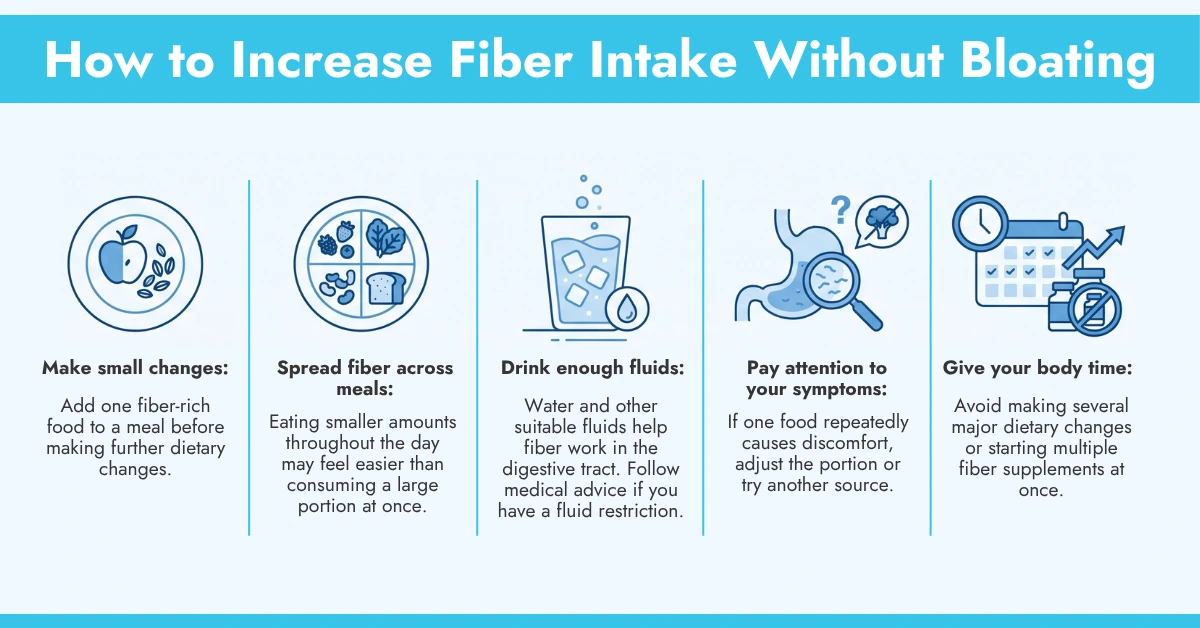
How to Increase Fiber Intake Without Bloating
A sudden jump in fiber can cause gas, bloating, and abdominal cramps. Your digestive system needs time to adjust, especially when you start eating more fermentable foods.
Try these steps:
- Make small changes: Add one fiber-rich food to a meal before making further dietary changes.
- Spread fiber across meals: Eating smaller amounts throughout the day may feel easier than consuming a large portion at once.
- Drink enough fluids: Water and other suitable fluids help fiber work in the digestive tract. Follow medical advice if you have a fluid restriction.
- Pay attention to your symptoms: If one food repeatedly causes discomfort, adjust the portion or try another source.
- Give your body time: Avoid making several major dietary changes or starting multiple fiber supplements at once.
For instance, you could add a small serving of oats to breakfast and try beans with lunch on another day. If your body tolerates those changes, add more variety gradually.
Some fermentable fibers, particularly inulin, can cause gas in sensitive people.
Persistent bloating deserves attention rather than an automatic increase in fiber.
The National Institute of Diabetes and Digestive and Kidney Diseases (NIDDK) recommends adding fiber little by little and drinking enough liquids.
Are Fiber-Rich Foods Better Than Fiber Supplements?
Whole foods give you more than fiber alone. Beans, fruits, vegetables, whole grains, nuts, and seeds contain varying amounts of vitamins, minerals, and other plant compounds.
A supplement may suit someone who struggles to meet daily fiber needs through food or needs a particular type of fiber for a digestive concern.
Psyllium and inulin work differently. Psyllium forms a gel and has research behind its use for certain bowel symptoms. Inulin acts as a fermentable prebiotic fiber, but some people experience more gas when they consume it.
Check the ingredient list, serving instructions, and possible side effects before choosing a supplement. Ask a pharmacist or other qualified healthcare professional about a product if you take medication or have a digestive condition.
Uptown Rx Pharmacy’s Vitamins & Supplements collection offers products to explore when considering fiber for gut health. Choose a supplement based on its ingredients and your individual needs, rather than assuming that a higher dose or a prebiotic label automatically means better digestive health.
Common Fiber Mistakes That Cause Digestive Discomfort
A few common mistakes can make dietary changes harder than necessary.
- Eating too much fiber too soon: A sudden jump can trigger gas and bloating. Add fiber gradually instead.
- Relying on just one food: Eating only bran, beans, or a fiber powder limits dietary variety. Choose different foods as your tolerance allows.
- Treating all supplements the same: Psyllium, inulin, and other ingredients have different properties. Read the label and follow the product directions rather than switching between supplements without considering their differences.
If digestive symptoms continue despite changes to your diet, ask a healthcare professional to assess the cause.
When Should You Seek Professional Advice?
Speak with a healthcare professional if you have persistent constipation, ongoing bloating, or a digestive condition that makes food choices difficult. Blood in your stool, unexplained weight loss, severe abdominal pain, or persistent changes in bowel habits deserve medical evaluation. Do not assume that low fiber explains every digestive problem.
Conclusion
Fiber for gut health does not come from one magic food or supplement. A varied diet of fruits, vegetables, legumes, and whole grains gives you different types of fiber for digestion and gut bacteria. Raise your intake gradually, drink enough fluids, and pay attention to your body’s response. If symptoms persist, seek professional advice rather than assuming that more fiber will solve the problem.
Medical Disclaimer:
This article about Fiber for Gut Health is for informational purposes only and does not replace professional medical advice, diagnosis, or treatment. Consult a qualified healthcare professional regarding your individual digestive health concerns. Limited AI assistance was used in research, writing, and drafting. All images are AI-generated.


